By: Southeast Culvert, Inc.
Project Summary
The 2023 Going Green Project of the Year transformed limited urban space into a dual-purpose stormwater management system at Spelman College. Using corrugated steel pipe, the project captures runoff for irrigation while returning excess water to the ground through infiltration.
Spelman College is a historic ally black (HBCU) liberal arts college for women in Atlanta. It is located in one of the oldest and most densely developed area of the city. Spelman is a private institute so funding for facilities has been lacking for many years. A recent influx has allowed for some new development.
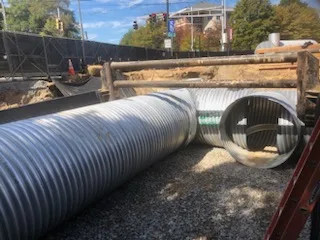
A Smarter Approach to Stormwater at Spelman College
The 2023 NCSPA Going Green Project of the Year demonstrates how underground stormwater infrastructure can solve multiple challenges in a confined urban setting.
Submitted by Southeast Culvert, Inc., the project supported expansion efforts at Spelman College in Atlanta, Georgia. Located in one of the city’s oldest and most densely developed areas, the campus faced significant site constraints, aging utilities, and strict stormwater requirements. However, those challenges became an opportunity to showcase the versatility of corrugated steel pipe systems.
Meeting Atlanta’s Runoff Reduction Requirements
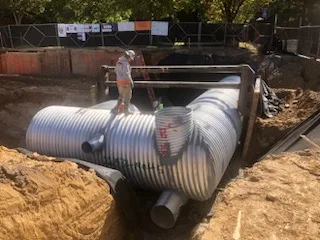
Atlanta requires new developments to capture and manage the first inch of rainfall generated on a site. As a result, designers needed a solution that would provide both stormwater storage and runoff reduction without consuming valuable surface space.
Traditional surface detention systems were not practical. Instead, the design team selected underground corrugated steel pipe systems that could fit within the limited footprint while working around existing utilities.
The project demonstrates how modern stormwater management systems can help owners maximize usable land while still meeting environmental goals.
The project also highlights how corrugated steel pipe can be used in innovative ways to support both water quality and site development objectives.
One Pipe Product, Two Different Stormwater Functions
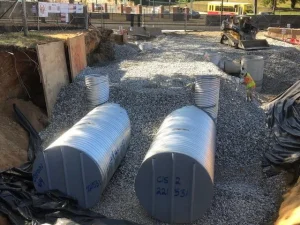
The design incorporates both a stormwater cistern and an infiltration system using the same pipe product.
Each system utilizes 84-inch diameter, 14-gage, 5-inch x 1-inch corrugated aluminized steel Type 2 pipe.
During rainfall events, runoff first enters the cistern system where water is stored for landscape irrigation around the new campus facilities. Once the cistern reaches capacity, excess water flows into the adjacent infiltration system where it slowly returns to the surrounding soils.
This approach creates a sustainable water management cycle while reducing demand on municipal water resources.
Projects like this demonstrate why corrugated steel pipe continues to be a preferred solution for both stormwater management and water reuse applications. Similar benefits were demonstrated in the CSP Providing Recharge, Water Quality, Smaller Footprints and Lowered Costs project, where underground infrastructure helped maximize usable land while managing runoff.
Maximizing Sustainability Below Ground
One of the most interesting aspects of the project is how the same corrugated steel pipe product serves two completely different purposes. The cistern section functions as a leak-resistant storage system designed for water reuse. Meanwhile, the infiltration section is engineered to allow water to move back into the surrounding soil profile.
That flexibility helped designers create a highly efficient stormwater management system without introducing multiple material types or expanding the project footprint. The project also highlights how underground systems can support sustainability goals while preserving valuable campus space for buildings, green areas, and pedestrian use.
As communities continue seeking resilient infrastructure solutions, underground systems like this provide an effective way to balance development needs with environmental stewardship. The focus on environmental performance mirrors the objectives of the Wildlife Crossing Overpass Supports Conservation Goals, another Going Green Project of the Year winner that combined infrastructure improvements with ecological benefits.
Why This Project Stands Out
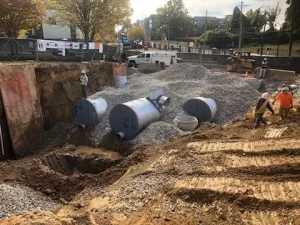
The Spelman College Center project demonstrates how corrugated steel pipe can address complex urban stormwater challenges through innovative design.
By combining stormwater harvesting, irrigation reuse, and groundwater recharge into a single underground system, the project provides long-term environmental benefits while maximizing available space. The project also reinforces many of the benefits highlighted in NCSPA’s Why Steel resource center, including durability, sustainability, and versatility.
Its emphasis on water quality and environmental stewardship also shares common goals with the Restoring a Trout Stream Through Golf Course Grounds project and the Pipeline Post-Wildfire Flood Mitigation Project, both of which demonstrate how corrugated steel pipe can support resilient infrastructure and environmental restoration.
It is an excellent example of why the project earned NCSPA’s 2023 Going Green Project of the Year recognition.