By: Lane Enterprises
Project Summary
Lane Enterprises supplied corrugated structural plate to rehabilitate bridge piers on the active Pierre & Eastern Railroad in South Dakota. The innovative stay-in-place form system protected existing foundations, minimized construction impacts, and extended the service life of a critical rail crossing.
The Pierre & Eastern Railroad plays an important role in moving agricultural products and freight across South Dakota. Maintaining reliable bridge infrastructure along active rail corridors is essential, but replacing bridge foundations can be both costly and disruptive to rail operations.
When engineers identified the need to extend the service life of a railroad bridge near Rapid City, they pursued a rehabilitation strategy that would strengthen the existing piers while allowing the bridge to remain in service. Lane Enterprises provided a corrugated structural plate solution that accomplished both objectives.
Protecting Existing Bridge Foundations
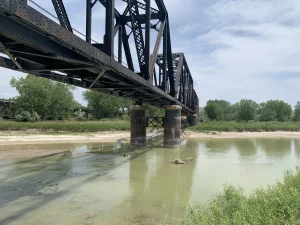
Instead of replacing the original bridge piers, engineers chose to reinforce the existing foundations.
Micro piles were drilled a minimum of 20 feet into the underlying shale bedrock to provide additional structural support. Once the foundation improvements were complete, crews installed corrugated structural plate around the existing piers, creating permanent forms that would later be filled with reinforced concrete.
Bridge rehabilitation projects like this allow owners to preserve existing infrastructure while reducing construction costs and minimizing operational disruptions. Engineers can explore similar applications through NCSPA’s Structural Plate product page and Technical Resources.
Corrugated Structural Plate as Permanent Forms
Unlike temporary concrete forms that are removed after placement, the galvanized structural plate remained in place as part of the completed bridge foundation.
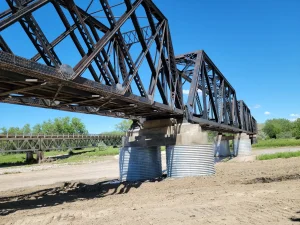
After assembly, crews tightened the bolted connections and prepared the forms for concrete placement. The contractor positioned the bolts so the nuts remained inside the forms, creating a clean exterior appearance while simplifying construction.
Once the reinforced concrete cured around the existing bridge piers, the new protective shell provided additional durability while helping safeguard the foundations against future deterioration.
This innovative use of structural plate demonstrates the versatility of corrugated steel beyond traditional culverts and buried bridges. Similar rehabilitation techniques can be seen in the Union Pacific Bridge Replacement, where structural plate solved a challenging railroad infrastructure project, and the Malatya Hatunsuyu Railway Underpass, where rapid installation minimized disruptions along a critical rail corridor.
Preserving Hydraulic Capacity
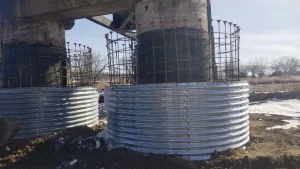
Following concrete placement, crews installed reinforced concrete caps above each rehabilitated pier before backfilling and restoring the stream channel.
The work maintained the bridge’s hydraulic capacity during peak flow events while providing long-term protection for the rehabilitated foundations. Construction was completed during February 2022, demonstrating how structural plate systems can support efficient winter rehabilitation projects.
Owners evaluating long-term rehabilitation alternatives can compare expected durability using NCSPA’s Service Life Calculator and review additional performance research within NCSPA’s Studies & Reports.
Extending Infrastructure Instead of Replacing It
The Pierre & Eastern Railroad Bridge project highlights how rehabilitation can often provide greater value than complete replacement.
By strengthening existing foundations with micro piles, reinforced concrete, and corrugated structural plate, the project team extended the bridge’s service life while avoiding the costs and operational impacts associated with replacing an active railroad crossing.
For additional information about the railroad, visit the Pierre & Eastern Railroad website.