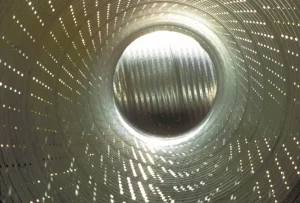
 Perforated corrugated steel pipe is designed for the collection, infiltration, retention, and controlled dissemination of water below ground. Commonly used in stormwater management, groundwater recharge, subsurface drainage, and agricultural ventilation systems, perforated pipe provides a durable and efficient solution for managing water movement while supporting long-term infrastructure performance.
Perforated pipe is available with a wide variety of perforation patterns to meet specific project requirements. Fully perforated pipe is often used for stormwater retention and groundwater recharge, allowing water to slowly infiltrate surrounding soils. In other applications, perforations may be placed over only a portion of the pipe perimeter or arranged in strips to support controlled drainage and water management.
Underground stormwater infiltration systems can reduce reliance on traditional storm sewer infrastructure, helping projects manage runoff, reduce peak flows, and support groundwater recharge. In many cases, these systems can provide cost-effective alternatives to expanding trunk storm drains or channel improvements.
Benefits of Perforated Corrugated Steel Pipe
Perforated pipe is frequently selected because it combines water management flexibility with durable steel construction and long-term performance.
Key benefits include:
- Supports stormwater infiltration and groundwater recharge through controlled water dissemination
- Multiple perforation patterns and configurations available to meet project-specific drainage requirements
- Effective subsurface drainage performance for underdrains, edge drains, and groundwater management systems
- Can reduce reliance on traditional storm sewer infrastructure, supporting cost-effective stormwater management approaches
- Versatile agricultural ventilation applications for grain stockpiles and crop storage systems
- Durable steel construction designed for long-term performance in demanding environments
Because perforation patterns vary based on project needs, engineers and owners should consult local fabricators when specifying perforation sizes, spacing, and layouts.
Common Applications for Perforated Pipe
Perforated corrugated steel pipe is commonly used for:
- Stormwater retention and infiltration systems
- Groundwater recharge systems
- Underdrains and edge drains
- Subsurface drainage infrastructure
- Agricultural ventilation systems for crop and grain storage
- Water management systems for transportation and site development projects
Depending on project requirements, engineers may also review Slotted Drain Pipe for surface water collection or Standard Corrugated Steel Pipe for traditional drainage conveyance applications.
Stormwater Design Resources and Engineering Guidance
Designing infiltration and subsurface drainage systems requires careful evaluation of water movement, storage, loading conditions, and site-specific requirements. Engineers and designers can explore the Water Quality System Calculator for stormwater planning, review Design Data Sheet #19 for drainage system design considerations, and explore additional Technical Resources for engineering guidance.
Projects focused on detention, infiltration, and water quality may also benefit from reviewing TechNote 207: Cisterns for underground stormwater storage concepts and Engineering Studies & Technical Reports related to steel drainage system performance.
Perforated Pipe Coatings and Durability
Perforated corrugated steel pipe is available with multiple coating options to support corrosion protection and long-term durability in varying environmental conditions. Engineers can review available corrugated steel pipe coatings, including Aluminum Coated Type 2 (ALT2) and polymer-coated steel pipe systems to support project durability goals.
Perforated pipe systems are manufactured to recognized industry standards, including applicable ASTM specifications and AASHTO guidance for drainage infrastructure design.
It is recommended that you check with your local fabricator before specifying a particular perforation pattern.