By: ViaCon Polska
Project Summary
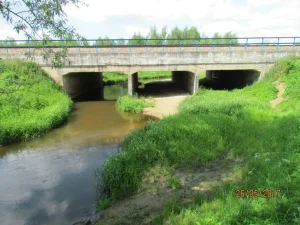
ViaCon Polska replaced an aging reinforced concrete railway bridge with deep corrugated structural plate structures that dramatically reduced rail disruption during construction. The rehabilitation project delivered a durable crossing while minimizing downtime on an active railway corridor.
An aging reinforced concrete railway bridge crossing the Łada River had reached the point where replacement was necessary. Because the bridge served an active railway corridor, engineers faced a familiar challenge: how to replace critical infrastructure without shutting down rail service for months.
Working with PKP PLK S.A. and the project team, ViaCon Polska developed a structural plate solution that provided the strength of a permanent bridge replacement while dramatically shortening construction time.
Replacing an Aging Railway Bridge
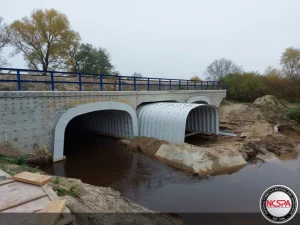
Project planners evaluated several replacement options before selecting deep corrugated structural plate structures. Traditional reinforced concrete construction would have required significantly longer railway closures and extended construction schedules.
Instead, the project team chose SuperCor structural plate arches that could be fabricated off site, transported to the project location, and assembled quickly once construction began. This approach minimized disruption to rail traffic while delivering a durable long-term replacement.
Engineers evaluating similar bridge rehabilitation projects can reference NCSPA’s Structural Plate product page, Design Data Sheets, and Technical Resources for additional design guidance.
Fast Installation Keeps Rail Traffic Moving
One of the project’s greatest advantages was speed.
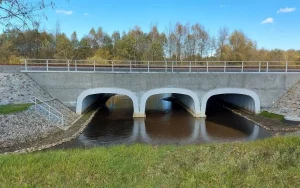
Each structural plate arch was assembled before being carefully pulled into its final position beneath the railway. Once installed, rail traffic resumed after only a few days of downtime, compared with the months often associated with conventional bridge replacement.
Accelerated construction continues to make structural plate systems attractive for active transportation corridors. Similar approaches were used on the Malatya Hatunsuyu Railway Underpass, where a critical railway reopened after only four days, and the Union Pacific Bridge Replacement, where rehabilitation minimized impacts to ongoing rail operations.
Built for Long-Term Durability
Each SuperCor structure received galvanized protection meeting EN ISO 1461 requirements along with a 200-micron epoxy and polyurethane coating system for additional corrosion resistance.
The completed bridge also incorporated reinforced concrete headwalls, steel collars, and carefully designed inlet and outlet treatments that combined structural performance with an attractive finished appearance.
Owners evaluating long-term infrastructure investments can compare expected performance using NCSPA’s Service Life Calculator and review additional research in NCSPA’s Studies & Reports.
A Better Approach to Railway Infrastructure
The rehabilitation of the Łada River railway crossing demonstrates how structural plate systems can replace aging transportation infrastructure while keeping essential rail networks operating.
By combining off-site fabrication, rapid installation, and durable corrosion protection, the project delivered a modern railway bridge designed to serve Poland’s transportation system for decades.