Extend the Life of Aging Culverts and Storm Sewer Infrastructure
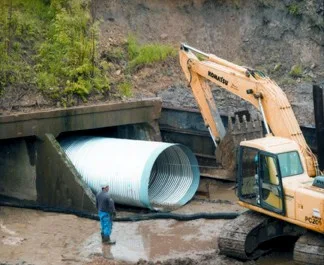
Replacing deteriorated culverts and storm sewer systems isn’t always the best solution. Corrugated steel rehabilitation systems restore structural integrity, improve hydraulic performance, and extend service life while minimizing construction costs, traffic disruptions, and environmental impacts.
For more than 100 years, engineers have relied on corrugated steel pipe and structural plate systems to rehabilitate aging drainage infrastructure throughout North America. Whether repairing deteriorated culverts, relining storm sewers, restoring bridge crossings, or extending the service life of municipal drainage systems, corrugated steel provides durable, economical, and proven rehabilitation solutions.
The NCSPA provides engineers, municipalities, DOTs, and contractors with the design resources, technical guidance, and engineering tools needed to evaluate rehabilitation alternatives and select the right solution for each project.
Why Choose Corrugated Steel Rehabilitation?
Benefits include:
- Extend existing infrastructure without full replacement
- Reduce roadway closures and traffic disruptions
- Lower construction and life cycle costs
- Preserve existing hydraulic capacity
- Fast installation with minimal excavation
- Improve structural performance
- Multiple rehabilitation options for virtually any structure
- Proven service life with protective coating systems
Sliplining & Culvert Relining
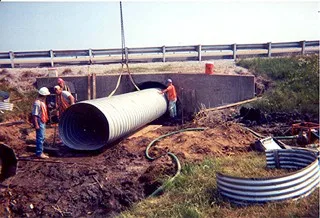
One of the most common rehabilitation techniques is sliplining, where a new corrugated steel pipe is installed inside an existing deteriorated culvert or storm sewer. The annular space is then grouted to create a structurally sound composite system.
Because corrugated steel provides excellent hydraulic efficiency and structural performance, engineers can often restore aging infrastructure while maintaining much of the original flow capacity.
Ideal for:
- Highway culverts
- Municipal storm sewers
- Railroad crossings
- Industrial drainage
- Agricultural drainage
Structural Plate Rehabilitation
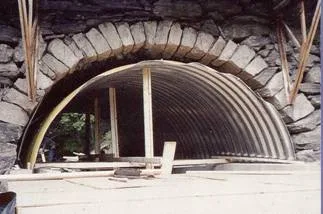
Large culverts, buried bridges, tunnels, and open-bottom structures can often be rehabilitated using corrugated steel structural plate systems rather than complete replacement.
Structural plate sections are assembled within the existing structure and connected with high-strength bolts, creating a durable new liner capable of extending service life for decades.
This approach minimizes excavation while preserving existing roadways, utilities, and surrounding infrastructure.
Hydraulic Performance
Maintaining hydraulic capacity is a critical consideration during rehabilitation.
Modern corrugated steel rehabilitation systems use optimized corrugation profiles, smooth-flow options such as Spiral Rib Pipe, and engineered liner designs to minimize capacity loss while restoring structural integrity.
In many projects, rehabilitation can improve long-term hydraulic performance compared to deteriorated existing structures.
Construction Advantages
Compared to complete replacement, rehabilitation projects typically require:
- Less excavation
- Reduced traffic impacts
- Shorter construction schedules
- Lower equipment costs
- Fewer environmental disturbances
- Reduced overall project cost
These benefits make corrugated steel rehabilitation particularly attractive for heavily traveled highways, municipalities, railroads, and environmentally sensitive areas.
Common Rehabilitation Applications
- Culvert rehabilitation
- Storm sewer rehabilitation
- Pipe relining
- Sliplining
- Bridge rehabilitation
- Structural plate rehabilitation
- Tunnel rehabilitation
- Mining infrastructure
- Industrial drainage
- Railroad drainage
- Municipal infrastructure renewal
Engineering Resources
Continue your research:
- Storm Sewer Products
- Spiral Rib Pipe
- Standard Corrugated Steel Pipe
- Protective Coating Systems
- Design Resources
- Technical Resources
- Engineering Calculators & Charts
- Engineering Research & Technical Reports
- Project Spotlights
- Engineering Video Library
FAQ
What is culvert rehabilitation?
Culvert rehabilitation restores existing drainage structures using engineered lining systems instead of complete replacement, extending service life while reducing costs and traffic disruptions.
What is sliplining?
Sliplining installs a new corrugated steel pipe inside an existing culvert or storm sewer, followed by grouting the annular space to restore structural performance.
Can bridges be rehabilitated using structural plate?
Yes. Corrugated steel structural plate systems can rehabilitate many buried bridges, arches, tunnels, and large culverts while minimizing excavation and roadway closures.
How long do rehabilitation systems last?
Service life depends on environmental conditions and coating selection. Galvanized, Aluminized Type 2, and polymer-coated steel provide long-term durability, and the NCSPA Service Life Calculator helps estimate expected performance.